

Not all men's dress shoes are created equal. While many shoes may look similar on the surface, the difference between handcrafted and machine-made dress shoes becomes clear when you examine quality, comfort, and longevity. Understanding how a shoe is made allows you to invest in footwear that offers superior performance, timeless style, and long-term value. This guide explains how to identify handcrafted dress shoes and how they compare to machine-made alternatives.
What Does Handcrafted Really Mean in Dress Shoes?
The answer lies in the hands — and the hours — behind every pair.
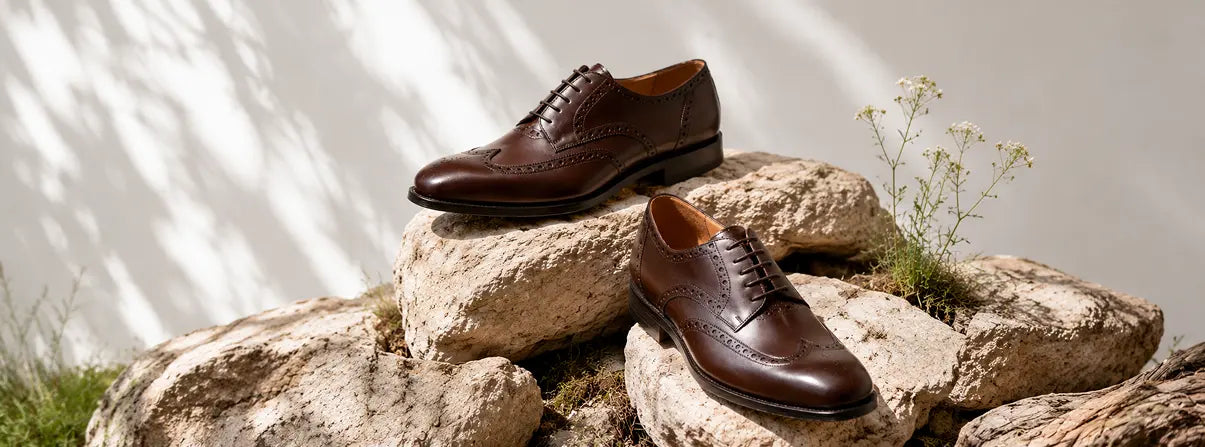
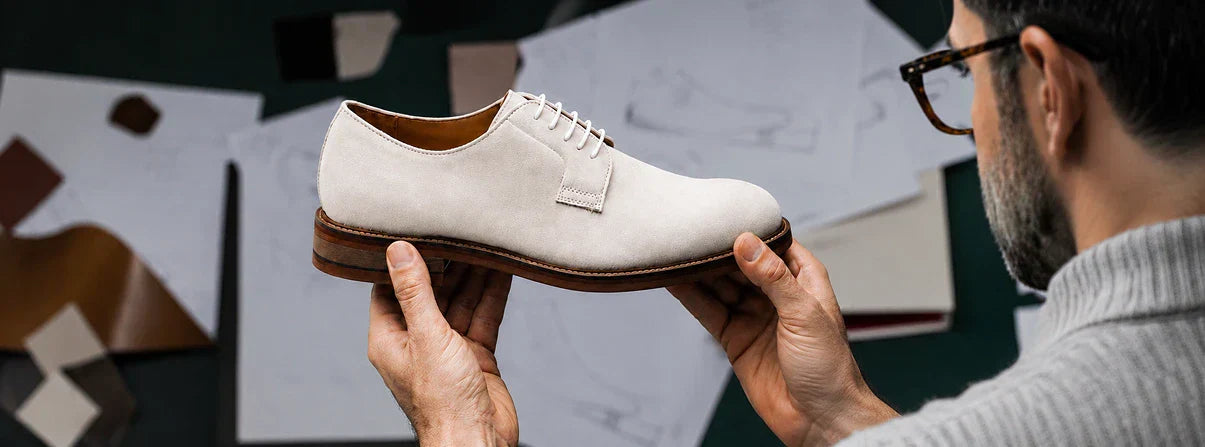
Handcrafted dress shoes are shaped, stitched, and finished by skilled artisans who bring years of experience to every step of the process. Unlike factory-produced shoes, handcrafted footwear emphasizes precision, material selection, and attention to detail. Artisans carefully cut the leather, shape the uppers, attach the soles, and finish the shoes by hand, ensuring consistency and durability. This level of craftsmanship is a key factor in what defines premium men's dress shoes and is a foundational concept in quality construction as a long-term investment.
A handcrafted shoe is not just made — it is considered. Every cut, every stitch, every edge reflects a decision made by a skilled hand.

Craftsmanship You Can See and Feel
Every handcrafted shoe tells a story through its finishing details — clean stitching, polished edges, and leather that breathes and flexes naturally. These are not accidents of production; they are the result of deliberate, skilled work.
When you hold a handcrafted shoe, the weight, the texture, and the precision of the construction communicate quality before you even put it on. Explore our men's dress shoe collection to experience the difference firsthand.
How Machine-Made and Handcrafted Shoes Are Built Differently
Construction technique is one of the most reliable indicators of quality. Understanding the difference between Oxford shoes, Derby shoes, and other styles becomes even more meaningful when you understand how they are built.
Goodyear Welt & Hand-Stitched Construction
Handcrafted dress shoes often use traditional methods such as Goodyear welting or hand-welting, which securely attach the upper to the sole while allowing the shoe to be resoled multiple times. This extends the life of the shoe and improves comfort as the sole molds to your foot over time.
Cemented & Adhesive-Bonded Construction
Machine-made shoes frequently rely on cemented construction, where the sole is glued rather than stitched. While this reduces manufacturing time and cost, it limits durability and makes resoling difficult or impossible — meaning the shoe's lifespan is tied directly to the adhesive bond.
The construction method also determines how a shoe ages. A Goodyear-welted shoe from our men's Derby collection will outlast a cemented alternative many times over — and look better doing it.

The Welt: Where Durability Begins
The welt is the strip of leather that connects the upper to the sole. In handcrafted shoes, this connection is stitched with precision — creating a bond that flexes with the foot and can be repaired. In machine-made shoes, this step is often skipped entirely in favor of adhesive.
Understanding welting helps you evaluate any dress shoe at a glance. Look for visible stitching along the perimeter of the sole — a hallmark of quality construction found across our premium dress shoe range.
Leather Quality: The Material That Defines the Shoe
Leather quality plays a crucial role in distinguishing handcrafted shoes from machine-made ones. The grade of leather used affects breathability, flexibility, durability, and how the shoe ages over years of wear.
Full-grain leather doesn't just age — it improves. Each crease and patina is a record of the life lived in the shoe.

Full-Grain vs. Corrected Leather
Handcrafted dress shoes typically use full-grain or top-grain leather, which is more breathable, flexible, and durable. Over time, this leather develops a rich patina, enhancing the shoe's appearance and character with every wear.
Machine-made shoes often use corrected or synthetic leather that looks uniform but lacks character and durability. These materials may crack or peel with wear, diminishing both comfort and visual appeal. See the difference in our men's wingtip shoes and Oxford styles.
Three Visual Signs of a Handcrafted Dress Shoe
You don't need to be a cobbler to spot quality. These three visual indicators will help you identify handcrafted construction at a glance — whether you're shopping in-store or evaluating a pair you already own.
Even, Precise Stitching
Handcrafted shoes feature clean, consistent stitching with no loose threads or excess adhesive. Each stitch is placed deliberately, reflecting the care of the artisan rather than the speed of a machine.
Polished, Trimmed Edges
The edges of a handcrafted sole are carefully trimmed, beveled, and polished — not left raw or unfinished. This detail is often the clearest sign of quality construction and is absent in most machine-made footwear.
Natural Leather Grain
Premium handcrafted shoes use full-grain leather with a natural surface texture — not an artificial coating. The grain is visible, consistent, and develops character over time rather than cracking or peeling.
Comfort Over Time and Long-Term Value
The true test of any dress shoe is how it performs after months and years of wear. Handcrafted shoes are designed to adapt to your feet — improving with every use rather than degrading.
Adapts, Molds, Improves
As you wear handcrafted shoes, the leather softens and the insole molds to your foot shape, resulting in improved comfort with each use. This is especially noticeable in premium styles worn for formal occasions, where long hours demand both elegance and ease. With proper care, handcrafted shoes can last decades.
Comfortable Initially, Degrades Quickly
Machine-made shoes may feel comfortable initially but often lose support over time due to lower-quality materials and construction methods. The adhesive bond weakens, the synthetic lining compresses, and the shoe loses its shape — typically within one to two years of regular wear.
Sole Selection and Style Integrity
The quality of craftsmanship also influences sole performance and how a shoe presents across different dress codes and occasions.
Finished Leather & Quality Rubber
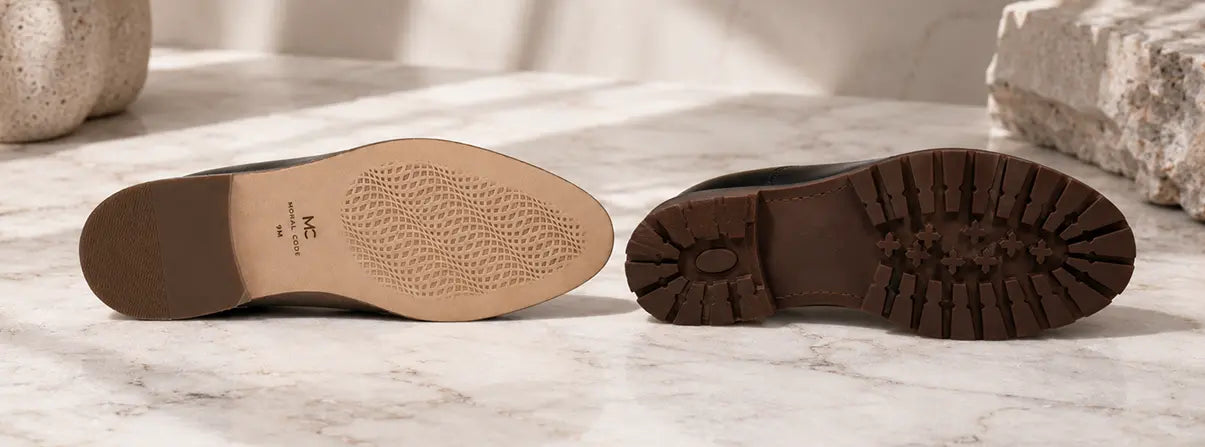
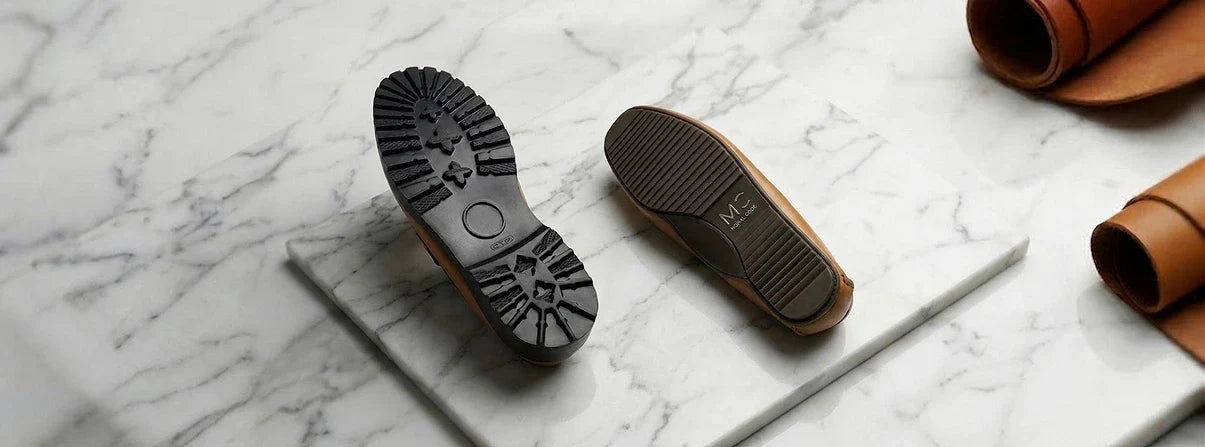
Handcrafted shoes often feature carefully finished leather soles or high-quality rubber soles designed to complement the shoe's construction. The sole is an extension of the craftsmanship — beveled, polished, and stitched to last. Leather soles offer breathability and a refined silhouette, while quality rubber soles add grip without sacrificing elegance. Explore our Derby styles and Wingtips to see this in practice.
Synthetic & Adhesive-Bonded
Machine-made shoes typically use synthetic or low-grade rubber soles bonded with adhesive. While functional in the short term, these soles lack the refinement and longevity of handcrafted alternatives. They are often thicker and less elegant in profile, and the adhesive bond is the first point of failure as the shoe ages. For a deeper comparison of styles, see our guide on Oxford vs. Derby shoes.
Your Handcrafted Shoe Identification Checklist
Use this checklist before your next dress shoe purchase to ensure you're investing in genuine quality.
Signs of a Truly Handcrafted Dress Shoe
- Visible, even stitching along the welt with no loose threads
- Polished and beveled sole edges — not raw or unfinished
- Full-grain or top-grain leather with natural surface texture
- Goodyear welt or hand-welt construction (not cemented)
- Leather insole that molds to the foot over time
- No excess adhesive visible at the sole join
- Consistent leather grain across the upper — no artificial coating
- Sole can be replaced by a cobbler (resoleable construction)
Ready to invest in handcrafted quality? Browse our latest men's dress shoes — each built to the standards above.


Final Thoughts: Choosing Craftsmanship Over Convenience
Understanding how to identify handcrafted versus machine-made dress shoes empowers you to make informed footwear decisions. Handcrafted shoes offer superior materials, expert construction, long-term comfort, and lasting style — qualities that define true premium men's dress footwear. While machine-made shoes may serve short-term needs, handcrafted dress shoes remain the gold standard for men who value quality, elegance, and longevity. For further reading, explore our guides on Oxford vs. Derby and premium men's dress shoes.
The best dress shoes are not bought — they are invested in. Choose craftsmanship, and the shoe will reward you for years to come.