

Choosing Between Leather and Rubber Soles for Men's Dress Shoes
When selecting premium men's dress shoes, most attention is given to leather quality and design, but the sole plays an equally important role in comfort, durability, and performance. Choosing between leather and rubber soles can significantly affect how your shoes feel, how long they last, and where they perform best. Understanding the differences between these sole types helps you select footwear that suits both your style and daily needs.


Why Shoe Soles Matter in Dress Shoes
The sole determines how a shoe interacts with the ground, absorbs impact, and supports your feet throughout the day. It also influences the overall appearance of the shoe, contributing to its formality and elegance. High-quality sole construction is one of the defining factors of premium footwear and is discussed as a core element in The Ultimate Guide to Choosing Premium Men's Dress Shoes.
Leather Soles: Tradition and Elegance
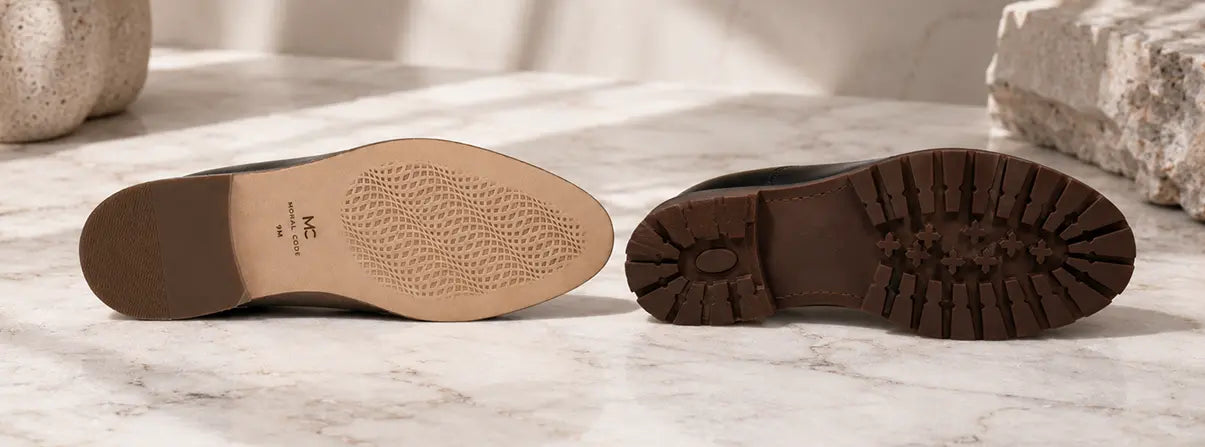
Leather soles have long been associated with classic men's dress shoes. They offer a slim profile that enhances the shoe's refined appearance, making them ideal for formal settings. Leather soles are breathable, allowing moisture to escape and helping regulate foot temperature, which contributes to comfort during extended wear.
Over time, leather soles mold slightly to your foot and walking style, creating a personalized fit. This natural adaptation is particularly valued in handcrafted shoes, where traditional construction methods ensure long-lasting performance, as explained in How to Identify Handcrafted vs. Machine-Made Dress Shoes.
When Leather Soles Work Best
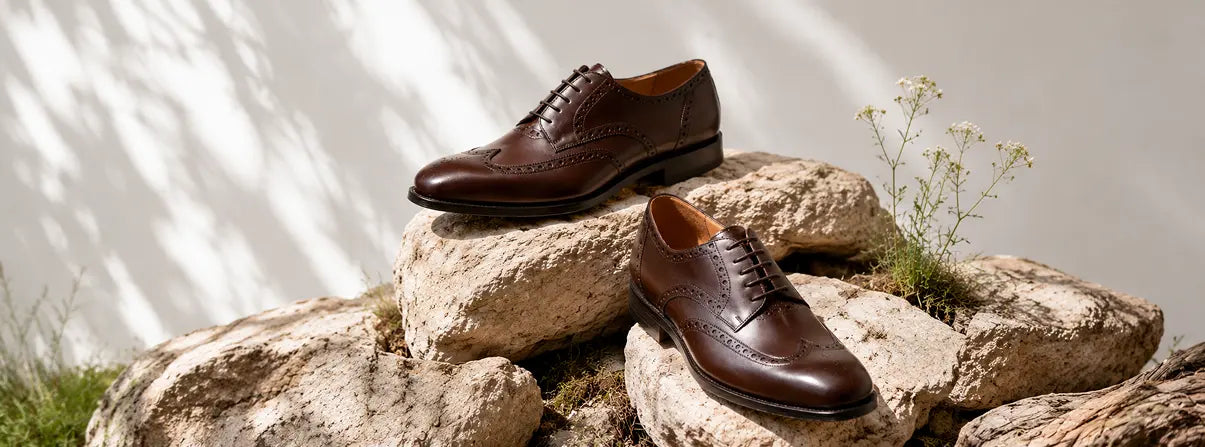
Leather-soled dress shoes are best suited for indoor environments, formal occasions, and settings where elegance takes priority over ruggedness. They pair exceptionally well with classic styles such as Oxford shoes, which are commonly worn in business formal and black-tie situations. The refined nature of leather soles complements the sleek silhouettes discussed in Oxford vs. Derby: Which Shoe Is Right for You?
However, leather soles can be slippery on wet surfaces and may wear faster when exposed to rough terrain or frequent outdoor use.
Rubber Soles: Comfort and Practicality
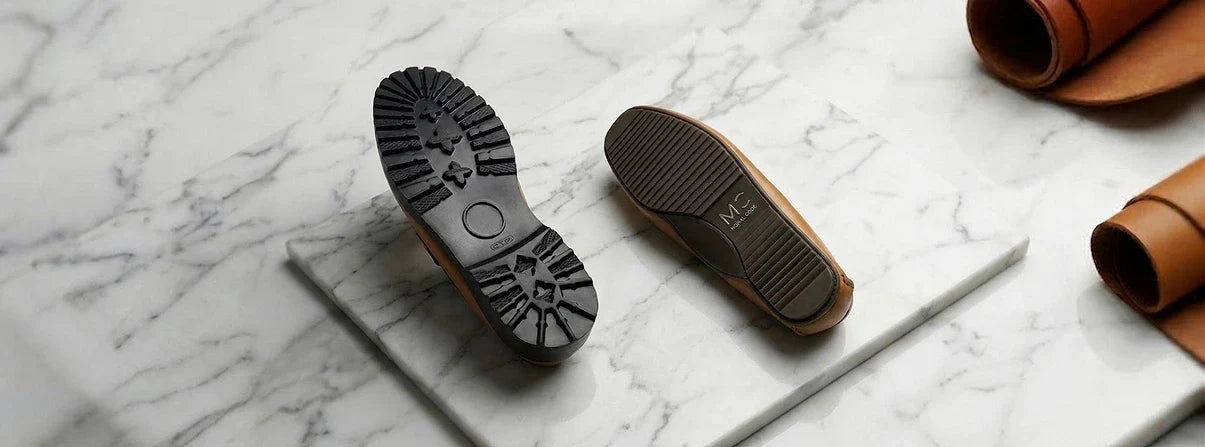
Rubber soles offer enhanced grip, flexibility, and durability, making them a practical choice for modern lifestyles. They provide better traction on wet or uneven surfaces and offer improved shock absorption, reducing foot fatigue during long days.
Modern rubber soles are often designed to blend seamlessly with formal shoes, maintaining a polished appearance while offering everyday comfort. This makes them a popular choice for business and semi-formal wear, where functionality is just as important as style.

When Rubber Soles Are the Better Choice
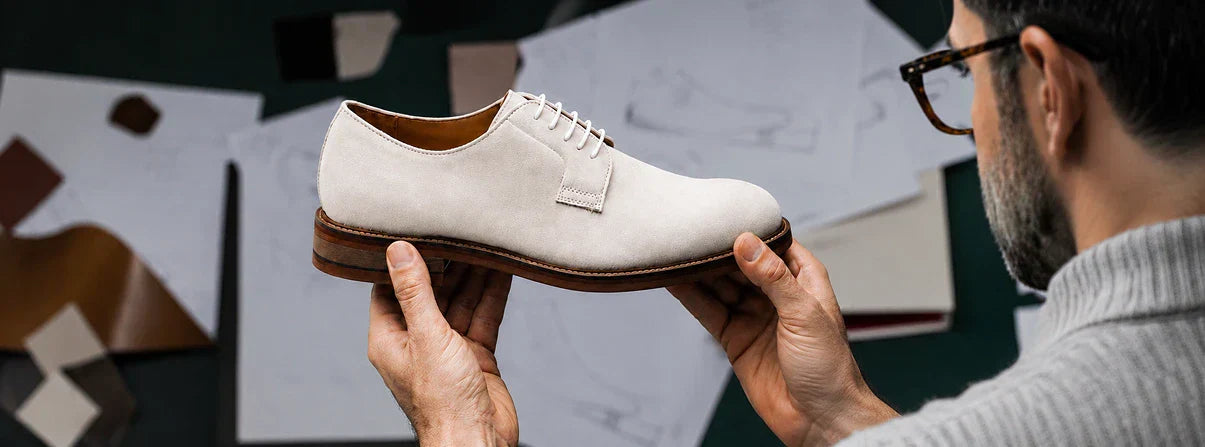
Rubber-soled dress shoes are ideal for men who walk frequently, commute daily, or encounter varying weather conditions. They are particularly well-suited for Derby shoes and semi-formal styles that transition easily between work and social settings. The versatility of these shoes aligns well with styling recommendations outlined in The Best Dress Shoe Styles for Every Formal Occasion.
Rubber soles also tend to last longer without frequent maintenance, making them a convenient option for daily wear.
Leather vs. Rubber Soles: Comfort and Longevity
Comfort depends largely on how and where the shoes are worn. Leather soles offer a refined feel and improve with age but may require careful maintenance. Rubber soles provide immediate cushioning and resilience, maintaining consistent comfort over time.
From a longevity standpoint, high-quality leather soles can be replaced through resoling, especially in handcrafted shoes, extending the shoe's lifespan significantly. Rubber soles are durable but may not always be replaceable depending on the construction method.
Sole Choice and Dress Shoe Style
The choice of sole should align with the overall design of the shoe. Minimalist styles such as wholecut shoes often pair best with leather soles to preserve their sleek aesthetic. More detailed styles, such as wingtips or cap-toe shoes, can accommodate rubber soles without compromising appearance. Understanding how design influences functionality is explored further in Wingtip, Cap Toe, Wholecut: Know Your Styles.
Which Sole Is Right for You?
Choosing between leather and rubber soles ultimately depends on your lifestyle, environment, and how often you wear dress shoes. If you attend formal events regularly and prioritize traditional elegance, leather soles are an excellent choice. If comfort, grip, and durability are more important for daily wear, rubber soles may better suit your needs.
Many men benefit from owning both options, ensuring they have appropriate footwear for every occasion—an approach recommended when building a balanced collection in The Ultimate Guide to Choosing Premium Men's Dress Shoes.
Final Thoughts: Balancing Style and Function
Leather and rubber soles each offer distinct advantages, and neither is inherently better than the other. The key is choosing the right sole for the right situation. By understanding how each performs and how it complements different dress shoe styles, you can make informed decisions that enhance comfort, durability, and style.
This guide completes an essential part of your footwear knowledge, working alongside the other spoke articles to help you invest confidently in premium men's dress shoes.